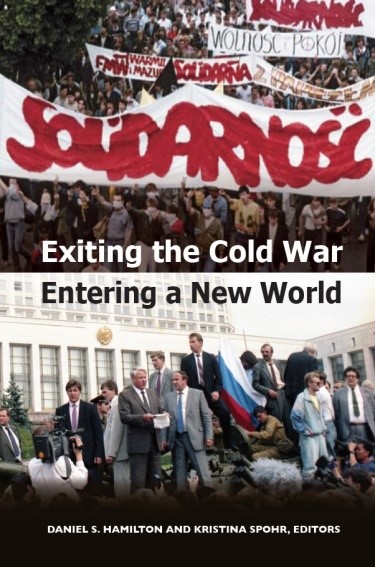
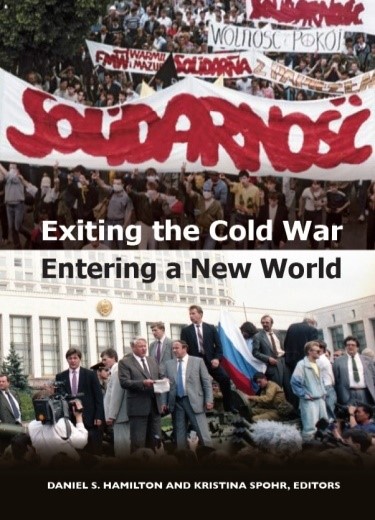
„Western policy makers acknowledged that the collapse of the Soviet Union was a unique opportunity to help freedom take root in Russia and Eurasia. At the same time, there were also enormous risks involved“.
Stephane Kieninger in „Money for Moscow: The West and the Question of Financial Assistance for Michael Gorbachev(in „Exiting the Cold War –Entering a New World“, eds.Hamilton and Spohr, Johns Hopkins University).
THE FALL OF THE BERLIN WALL in 1989 was a momentous event. It happened almost by accident. A misunderstanding between a low level East German official and his superiors made it possible. This started a chain of events which changed history. This was neither foreseen, preplanned nor ordered by higher authorities.
This was „peoplepower“ in action. One event led to another. Two years later, the once mighty Soviet Union no longer existed. It simply dissolved peacefully – not with a bang, but a whimper. Noone could have foreseen this, although the ailing symptoms of the lethargic empire had long been evident. The man who wanted to heal the patient – reform the system – Mikhael Gorbachev, was instead engulfed by the chain of events and dissappeared with it.